
TRAVEL DEMAND IS STRONG — BUT THE WAY WE TRAVEL IS CHANGING FAST
From an air traffic control failure and shrinking airline schedules to premium cabins, Airbnb hotels, AI travel agents, and changing booking habits, several developments are reshaping how travelers plan — and manage — their trips.
September 22, 2026 | Royl Travel Guide
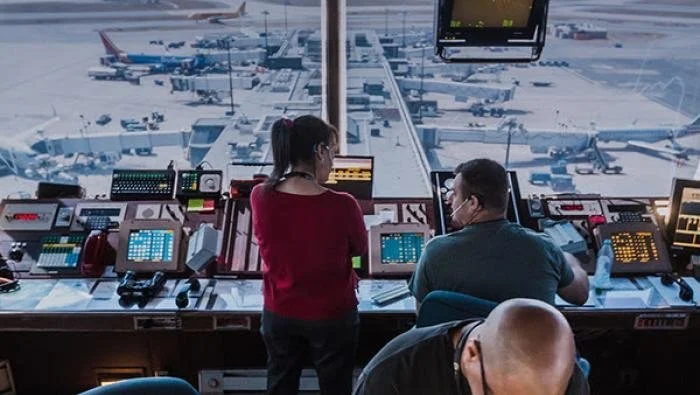
On September 21, a communications failure at a key Federal Aviation Administration air traffic control facility in Philadelphia disrupted flights throughout the Northeast. Hundreds of flights were canceled, airports slowed dramatically, and the effects extended far beyond the facility where the original problem occurred.
The failure was especially significant because it involved more than one layer of the system. The facility’s primary communications line failed, while its backup fiber-optic connection had already been accidentally severed during construction work. With both systems unavailable, controllers temporarily lost critical radar and communications capabilities. Newark Liberty International Airport was hit particularly hard, with more than 600 cancellations, while more than 200 flights were canceled at Philadelphia International Airport. JFK and LaGuardia also experienced disruptions. (AP News)
For travelers standing inside terminals watching departure boards change, it was another frustrating day of delays and cancellations. From an industry perspective, however, it was also a reminder of something much larger: modern travel depends on an enormous network of systems most passengers rarely see.
We tend to experience travel through the parts directly in front of us — the airline, the airport, the hotel, the destination, and the price of the ticket. Behind those visible pieces are air traffic controllers, communications networks, airport infrastructure, aircraft schedules, crews, fuel supplies, technology platforms, and thousands of operational decisions happening simultaneously.
When one part of that system fails, the consequences can travel hundreds or even thousands of miles.
And the timing of this disruption is particularly interesting because aviation and the broader travel industry are already undergoing several significant changes.
AIRLINES ARE LOOKING MUCH MORE CLOSELY AT WHERE THEY FLY
The pressure airlines are currently facing is not simply about whether people want to travel. In many parts of the market, demand remains remarkably resilient. The bigger question is whether every flight continues to make financial sense as operating costs rise.
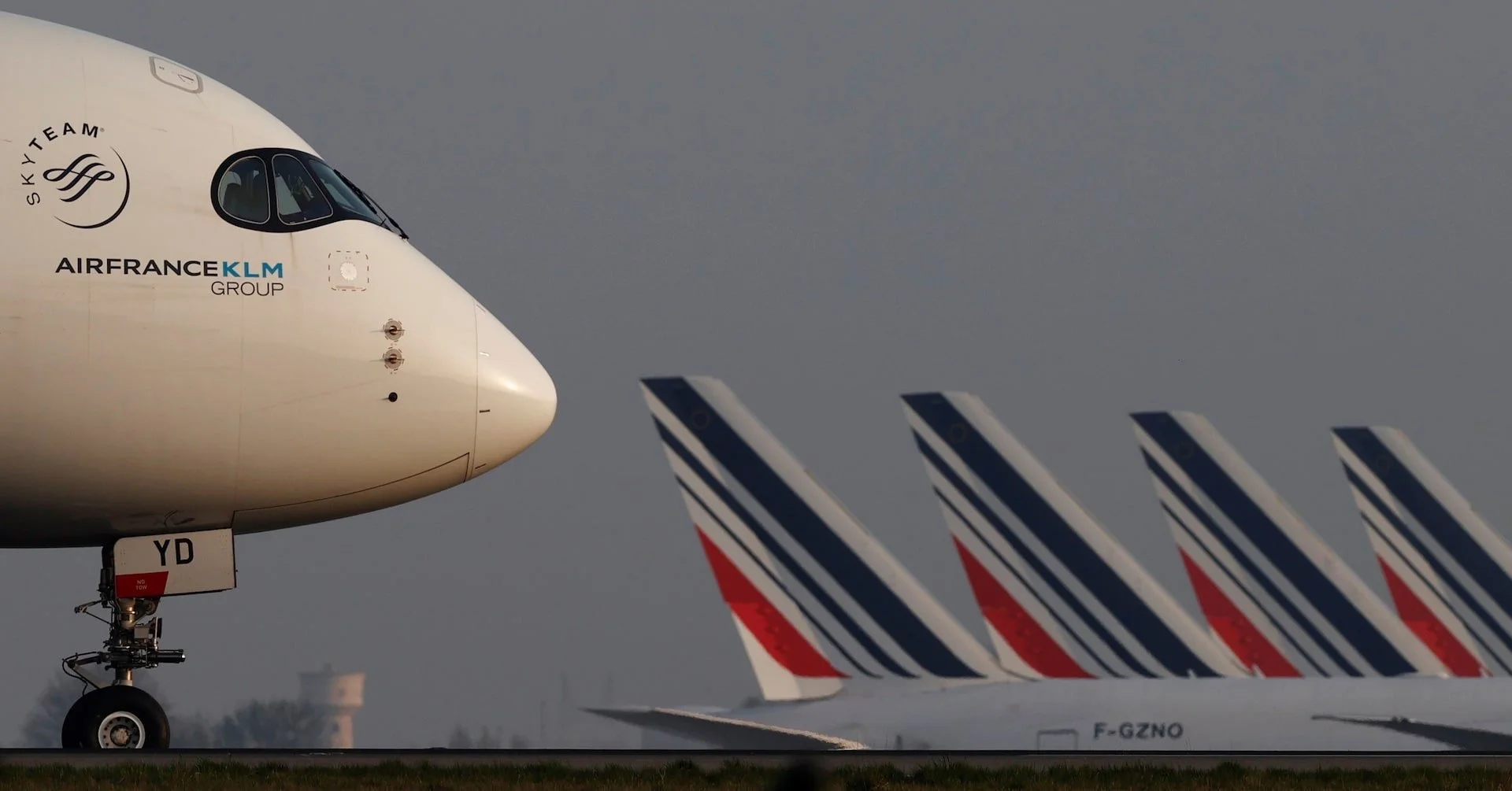
American Airlines, United Airlines, and Southwest Airlines have all begun adjusting planned capacity as higher fuel prices put additional pressure on their operations. American estimates that the latest increase in fuel prices could add roughly $1 billion to its fourth-quarter costs. United has already removed some previously planned December flights and has indicated that additional adjustments could follow into 2027. Southwest has reduced its planned 2026 capacity growth by roughly half. (Reuters)
That does not mean travelers suddenly stopped flying.
United described its fourth-quarter bookings as “tremendously strong,” while American and Southwest have also reported resilient revenue and demand. Instead, airlines are examining flights and routes where higher operating costs have weakened the economics of operating them. (Reuters)
For travelers, that distinction matters.
A destination can remain extremely popular while the number of convenient flights serving it decreases. A route that once operated several times each day may eventually have fewer frequencies, or an airline may shift an aircraft toward another market where the economics are more attractive.
That creates an interesting situation: demand can remain strong even while available capacity becomes tighter.
And while airlines are carefully examining costs in one part of their networks, another part of the aircraft is telling a very different story.
PREMIUM TRAVEL CONTINUES TO PERFORM
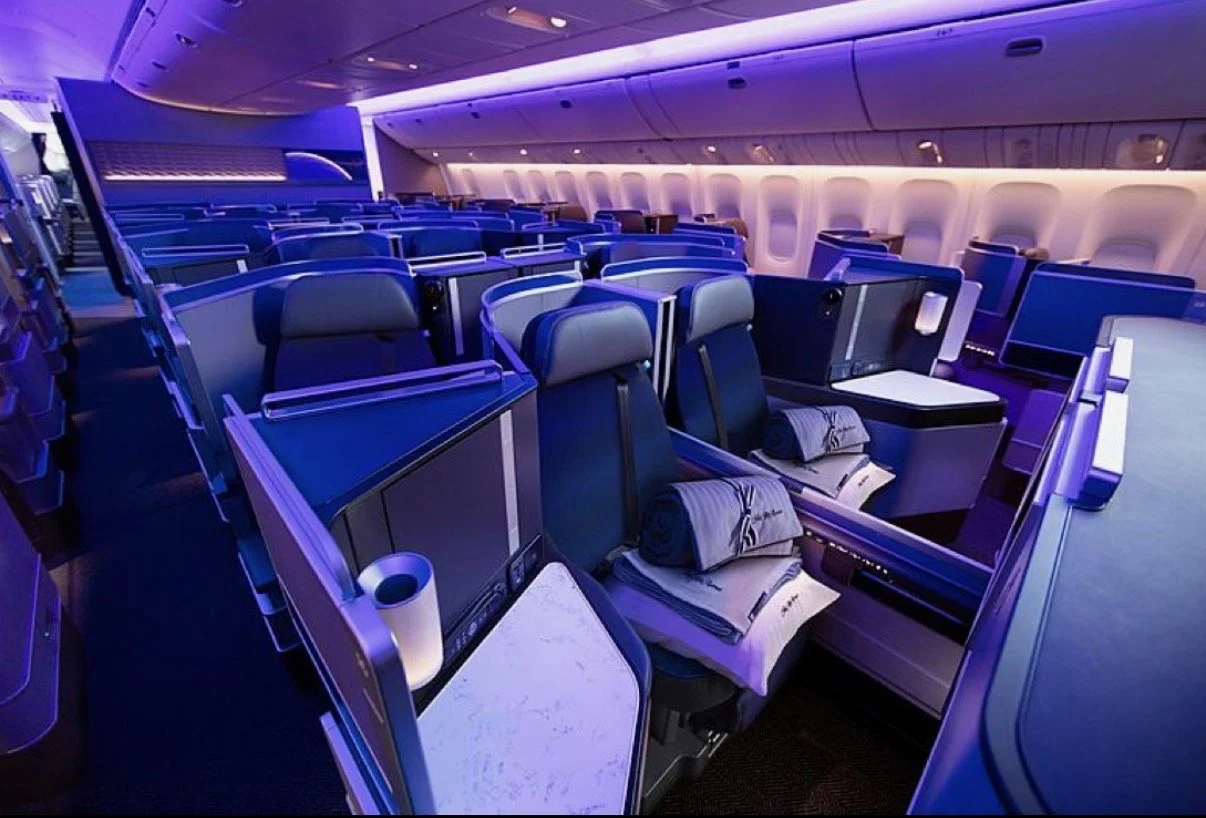
First class, business class, and other premium cabins continue attracting travelers willing to spend considerably more for comfort, privacy, space, and service.
Air France provides one of the clearest examples. Revenue from the airline’s premium, business, and first-class segments has increased 11%, according to Reuters, even as fares have risen and the broader aviation industry has faced pressure from expensive fuel and geopolitical disruption. (Reuters)
The airline has continued investing heavily in its high-end experience, including its La Première first-class product, upgraded cabins, luxury dining, lounges, and more personalized service.
That says something important about how travelers currently think about spending.
Travelers can be extremely price-conscious in one part of a trip while spending considerably more in another. Someone may spend hours comparing hotel prices and then pay substantially more for a premium seat on the airplane. Another traveler may choose economy airfare but spend heavily on an exceptional resort, restaurant, tour, or private experience once they arrive.
Luxury travel increasingly does not require every part of the trip to be luxurious.
Instead, travelers are deciding which parts of the experience matter enough to upgrade.
The hospitality industry is undergoing its own version of that change.
THE LINE BETWEEN AIRBNB AND HOTELS IS BECOMING LESS CLEAR
For years, one of the most basic accommodation decisions was fairly straightforward: hotel or Airbnb?
The two represented different styles of travel and often competed from opposite sides of the hospitality market. Airbnb built its identity around homes, apartments, cabins, and other alternatives to traditional hotels.
That separation is becoming much less distinct.
Airbnb is making a significant push into independent and boutique hotels. As of September 4, analytics firm AirDNA counted 3,939 hotels using Airbnb’s newer hotel-specific listing format across hundreds of markets. Airbnb CEO Brian Chesky has described hotels as a potential future multibillion-dollar business for the company. (Skift)
Rather than immediately attempting to replicate the enormous hotel inventories available through traditional online travel agencies, Airbnb is currently emphasizing more curated independent and boutique properties.
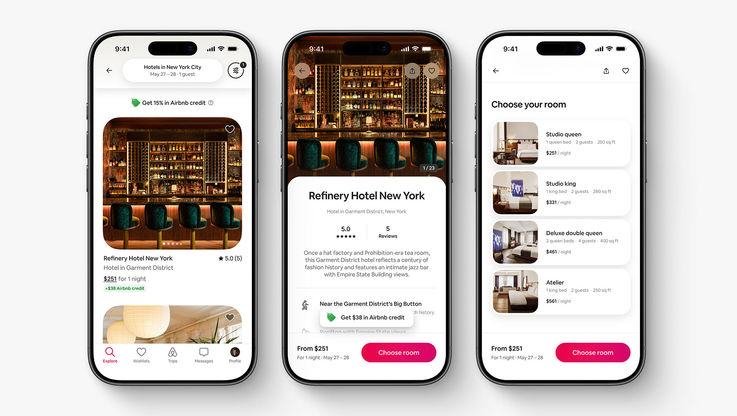
The change could eventually alter the way travelers think about accommodations altogether.
Imagine searching for a destination and seeing a downtown boutique hotel, a private apartment, a resort, a cabin, and an entire home presented alongside one another. Instead of beginning with the question, “Should I book a hotel or an Airbnb?” travelers may simply compare properties based on location, price, design, amenities, reviews, and the type of experience they want.
The category becomes less important than the property itself.
And in the future, the traveler may not even be the person performing all of that searching.
AI IS MOVING FROM PLANNING TRIPS INTO MANAGING THEM
For the past several years, artificial intelligence and travel have largely been discussed in terms of inspiration and planning.
A traveler might ask an AI assistant to build a four-day Seattle itinerary, compare neighborhoods in Paris, recommend restaurants in New York, or identify hotels near a particular attraction.
That was primarily AI helping travelers decide what to do.
The next stage is different.
General-purpose AI assistants are increasingly gaining the ability to search, compare, book, rebook, and perform travel-related tasks on behalf of users. Some of that transition has already begun. Skift recently highlighted AI assistants capable of booking and rebooking travel through conversational interfaces, including hotel reservations initiated through simple text requests. (Skift)
That does not mean every traveler today can hand an entire vacation over to an AI assistant and expect it to seamlessly manage every airline, hotel, restaurant, and transportation reservation. Fully integrated trip management is still developing, and significant questions remain around reliability, privacy, permissions, payments, and how much decision-making travelers will want to delegate.
But the direction is becoming much clearer.
Instead of simply asking, “Where should I go?” travelers may increasingly be able to ask, “What should I do now that something has changed?”
Imagine a flight delay several years from now. An AI assistant could potentially identify the disruption, compare alternate flights, recognize that a hotel arrival will be affected, flag a dinner reservation that may need to move, and help reorganize the itinerary around the new arrival time.
Today, many of those actions still require travelers to move between airline apps, hotel websites, confirmation emails, calendars, maps, and reservation platforms.
The long-term opportunity for AI is to connect those pieces.
A trip could begin functioning less like a folder full of separate reservations and more like one continuously managed travel plan.
Interestingly, technology is becoming faster at exactly the same time many travelers are becoming more hesitant about when they commit to a trip.
SOME TRAVELERS ARE WAITING LONGER TO BOOK
TUI, Europe’s largest tour operator, reported on September 22 that its customers are continuing to book later amid geopolitical and economic uncertainty.
That distinction is important.
The evidence does not suggest that travelers have simply stopped wanting vacations. TUI reported that demand remained strong heading into the fourth quarter, while forward bookings in key markets including Germany and the United Kingdom had increased 1% since mid-August. Overall reservations, however, remained below the previous year. (Reuters)
In other words, uncertainty may be changing when some travelers commit rather than eliminating their desire to travel altogether.
A traveler might know exactly where they want to go. They may already be monitoring a particular flight or hotel. They may even have dates selected.
But instead of booking months in advance, they wait.
They watch prices, geopolitical developments, fuel costs, economic conditions, and their own finances before finally clicking “Book.”
That behavior provides flexibility, but it can also create risk.
Airlines are becoming more selective about capacity at the same time some customers are shortening their booking windows. If those two trends continue, they can eventually collide.
A traveler may wait because they want greater certainty, only to discover later that the nonstop flight they were watching has fewer available seats. The preferred departure time may be gone. The hotel rate may have increased. Or the room category they wanted may already be sold out.
There is no universal rule that travelers should always book early or always wait. Different destinations, airlines, seasons, and types of trips behave differently.
But the balance between flexibility and availability is becoming increasingly important.
ONE OUTAGE, SEVERAL INDUSTRY CHANGES — AND ONE COMMON THREAD
At first glance, an air traffic control communications failure in Philadelphia has very little to do with Air France’s premium cabins, Airbnb listing hotels, artificial intelligence booking trips, or TUI customers waiting longer to make reservations.
Look closer, however, and the connection becomes much clearer.
Travel is becoming more interconnected, more technologically sophisticated, and in some ways more complicated.
Airlines are adjusting their networks as operating costs change. Premium travelers continue spending heavily on the parts of a trip they value most. The traditional boundary separating hotels from vacation rentals is becoming less obvious. Artificial intelligence is progressing from recommending trips toward helping execute and manage them. Travelers themselves are reconsidering how far in advance they are willing to commit.
And even after every reservation is made and every detail is carefully planned, something completely outside the traveler’s control — including the failure of a communications line hundreds of miles away — can still change everything.
None of this suggests that people are losing their appetite for travel.
The continued demand for flights, premium experiences, hotels, vacation rentals, destinations, and new travel technology suggests something closer to the opposite.
People still want to go.
What is changing is the environment in which those trips are planned and experienced.
The modern traveler increasingly has to balance two ideas that sound contradictory but may actually work best together:
Plan carefully — but expect the plan to change.
A great itinerary still matters.
Knowing how to adapt when that itinerary changes may matter just as much.
Royl Travel Guide
Travel • Hospitality • Tourism • Industry Trends
SOURCES & FURTHER READING
Reporting and industry information used in this article include the Associated Press on the September 21 FAA communications disruption; Reuters reporting on airline capacity and fuel costs, Air France premium travel, and TUI booking behavior; and Skift reporting on Airbnb’s expansion into hotels and the development of AI travel assistants.