
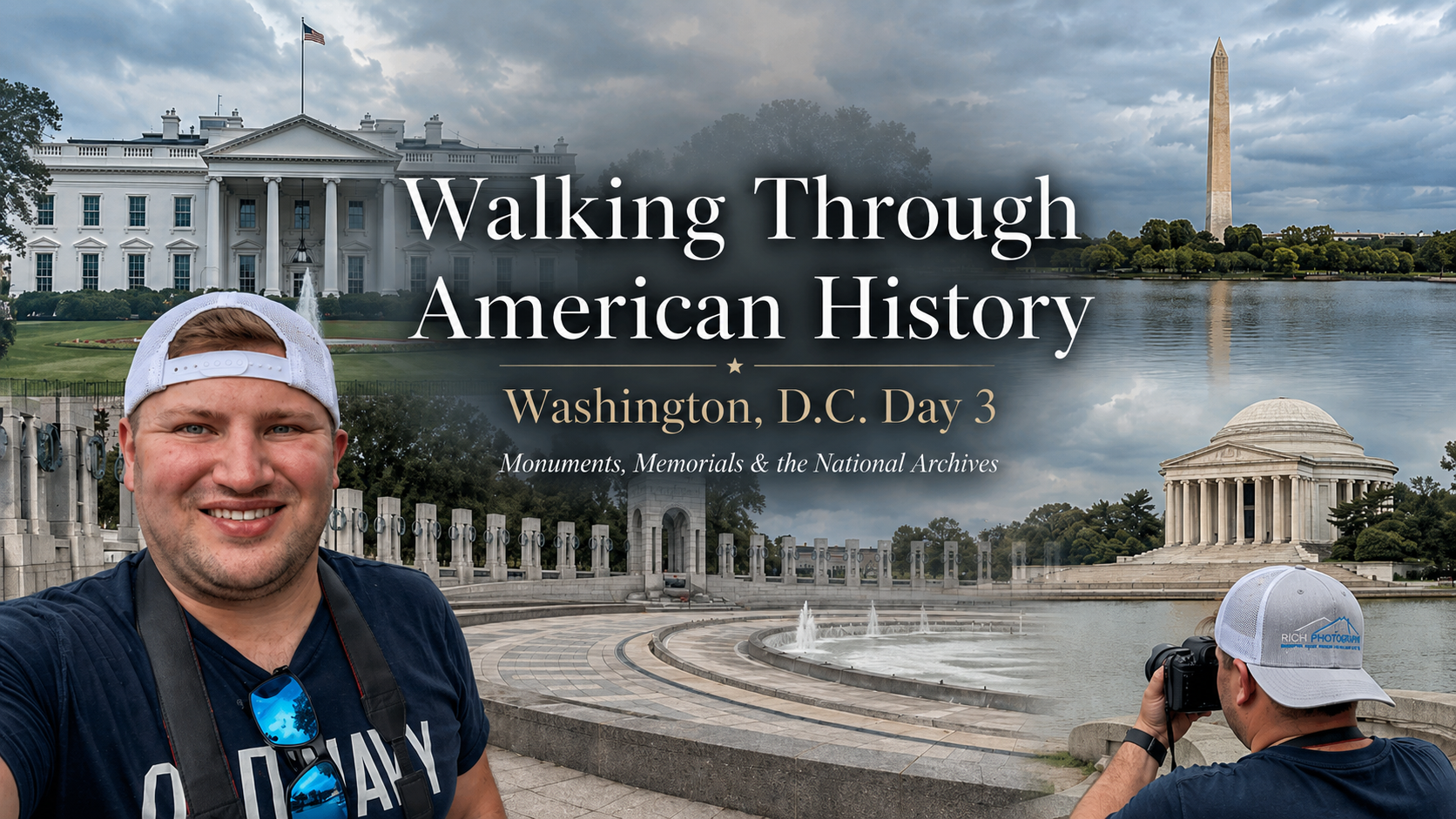
By Day 3 in Washington, D.C., I had already seen quite a bit of the city, but this ended up being one of the fullest days of the entire trip.
The plan combined many of the places that immediately come to mind when you think about Washington: memorials along the National Mall, famous government landmarks, a completely different view of the city from the Potomac River, and eventually the National Archives, where I would get to stand just a few feet away from some of the most important documents in American history.
And, of course, the camera was with me for all of it.
Starting the Day With a Different View of Washington
For this trip, I had booked the Ultimate Washington, D.C. Area Tour by Luxury SkyVue Convertible Van through Viator.
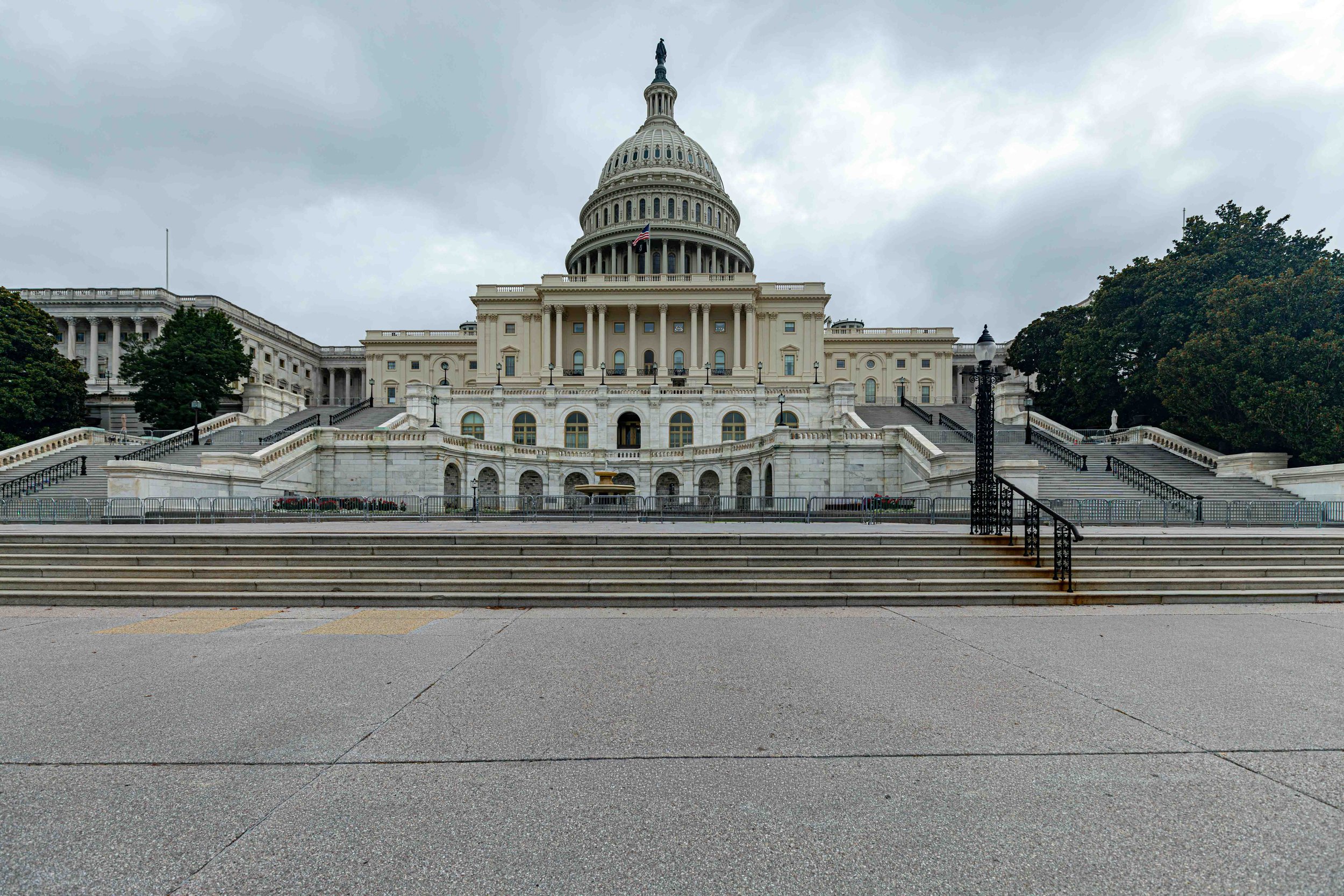
Front side of the U.S. Capitol Building
The tour started near the U.S. Capitol and gave me a chance to cover a lot of ground while still getting out to experience and photograph several of the major stops.
For a city like Washington, this type of tour made a lot of sense. Many of the memorials look fairly close together on a map, but once you start walking between them, those distances add up quickly.
Having someone else handle the driving also meant I could spend more time looking around, listening to the guide and paying attention to what I wanted to photograph next.
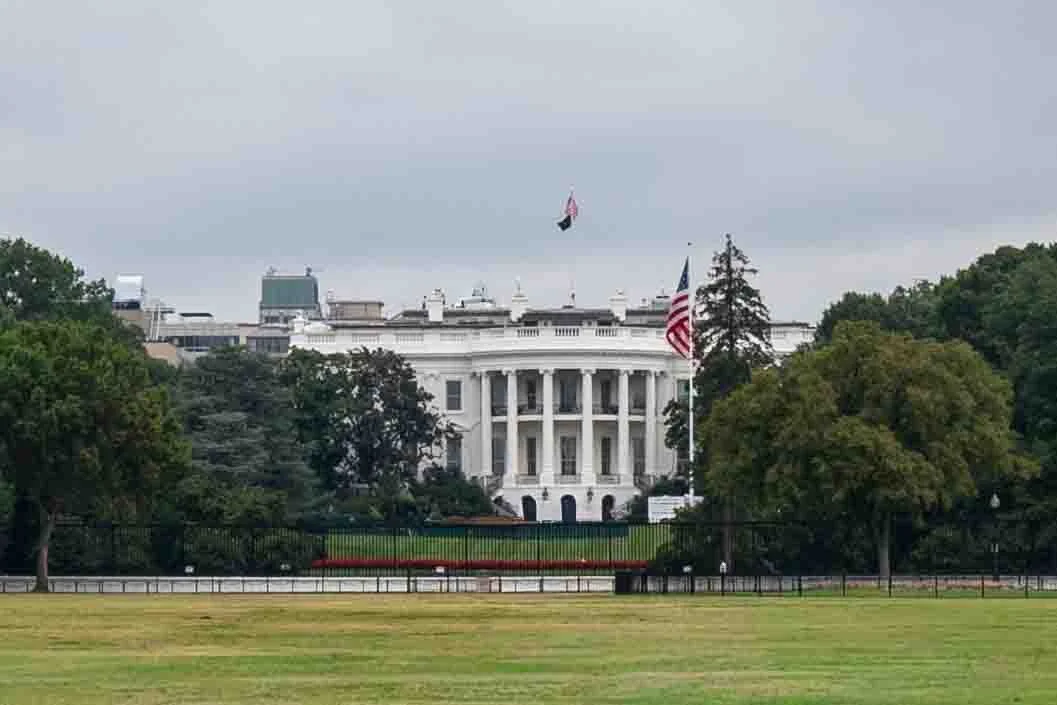
The White House
The World War II Memorial
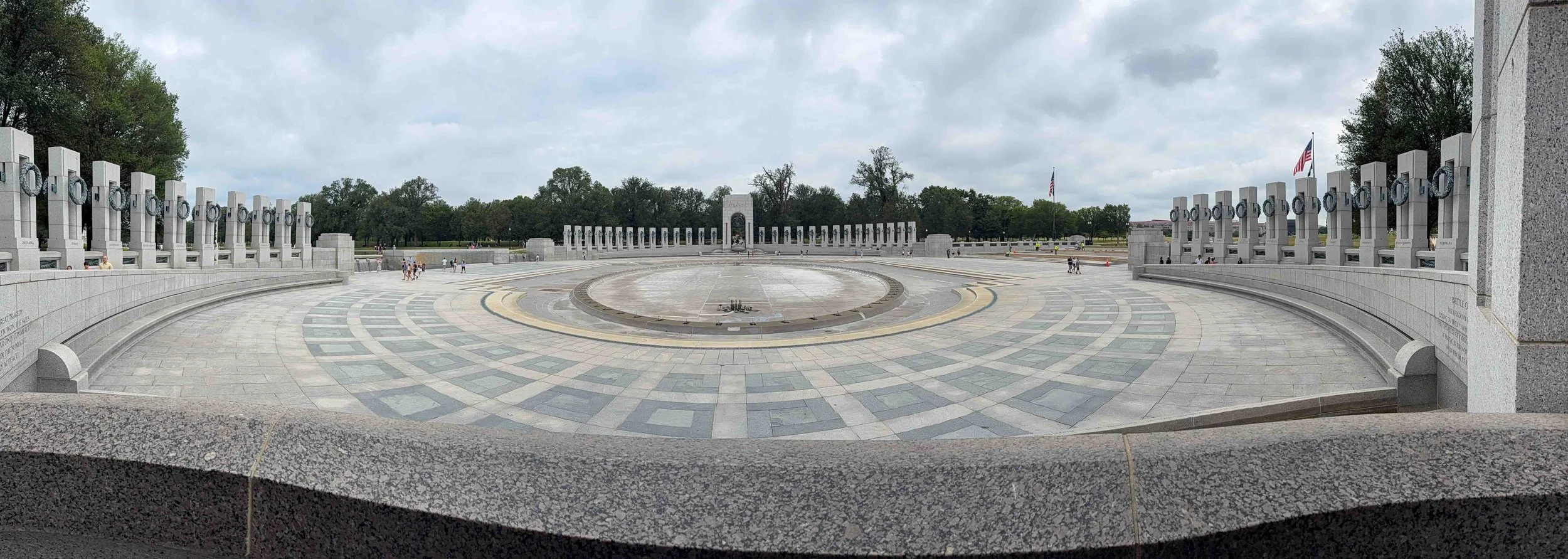
World War II Memorial
One of the major stops was the World War II Memorial, and photographically, this became one of my favorite locations of the day.
The memorial has a scale that is difficult to fully appreciate until you're standing inside it. Granite pillars representing the states and U.S. territories wrap around the plaza, each decorated with a bronze wreath.
Naturally, I had to find Texas, and I also photographed Illinois, which has its own personal connection for me. As I continued around the memorial, I photographed several of the other state pillars along with the arches, fountains, inscriptions and architectural details.
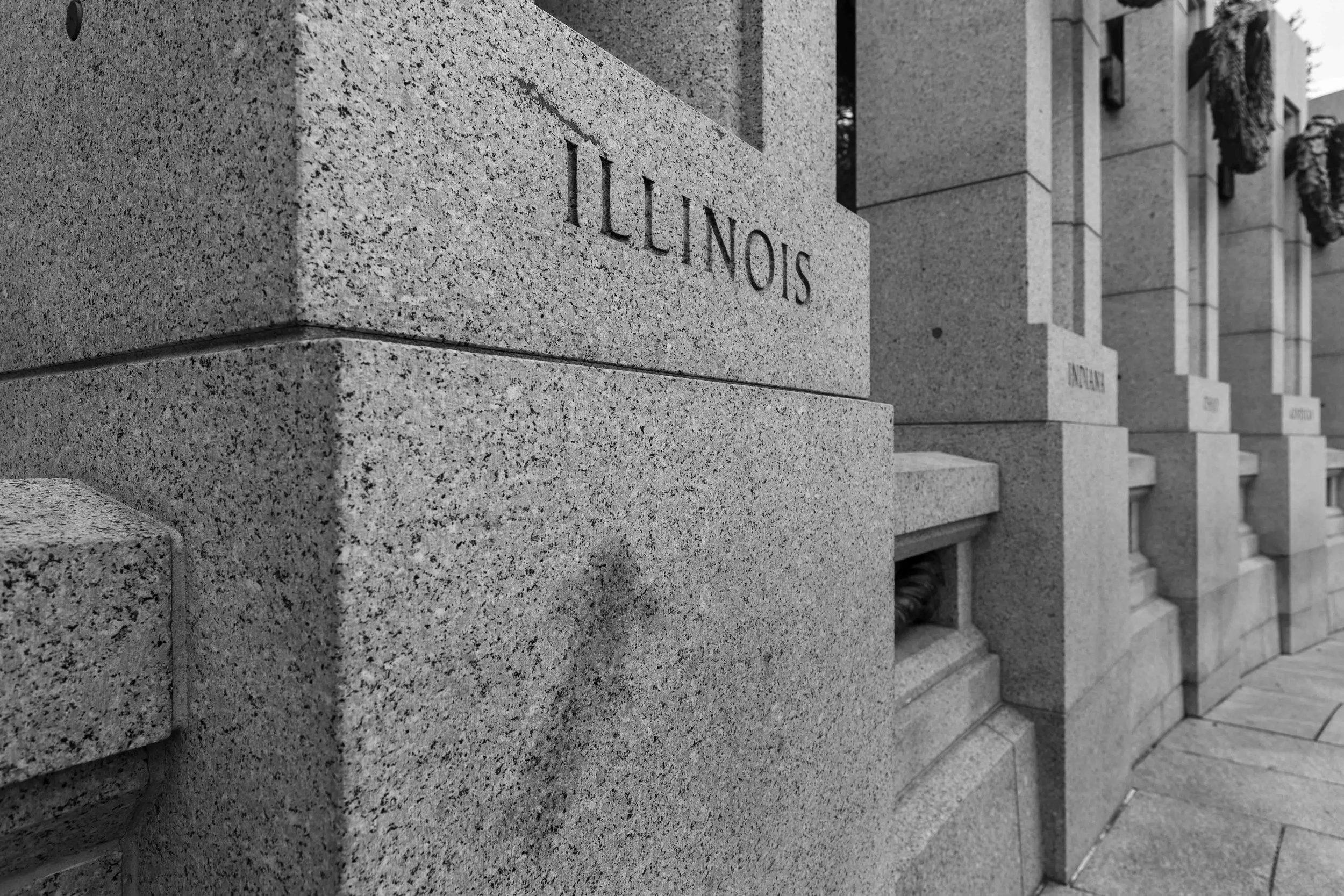
World War II Memorial
A number of my favorite photographs from this stop ended up being in black and white. With the overcast sky, granite architecture and bronze details, removing the color gave the images a more timeless feeling that fit the setting.
The memorial also rewards you for slowing down. Beyond the large architectural elements are inscriptions and smaller details recognizing the men and women who served during World War II.
From different points around the plaza, the Washington Monument rises above the memorial, creating one of those unmistakably D.C. views.
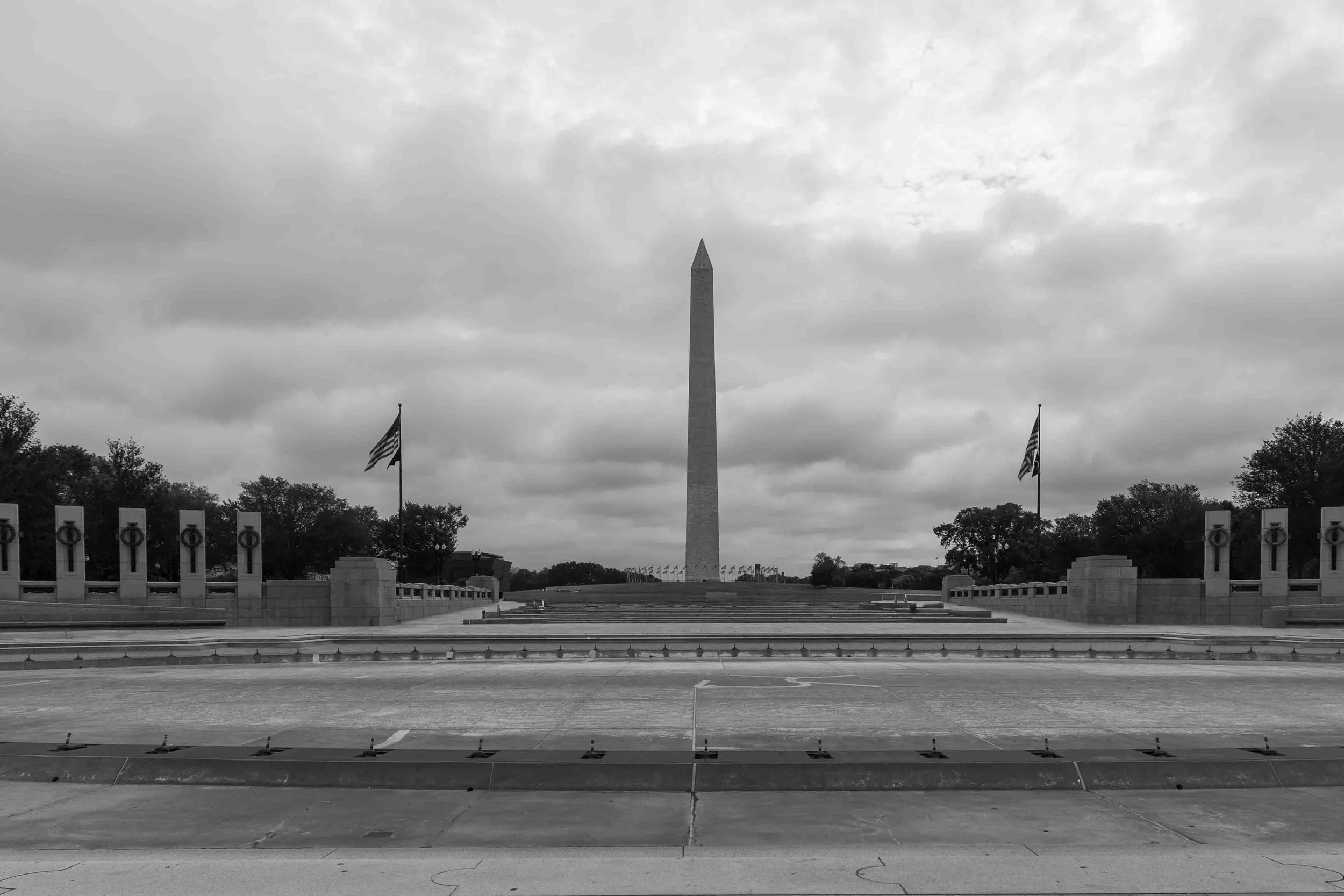
World War II Memorial
The Jefferson Memorial
From there, we continued toward the Thomas Jefferson Memorial along the Tidal Basin.
This is one of those buildings that changes completely depending on where you photograph it.
From across the water, the dome and columns create an almost perfectly balanced composition. Once you walk up the steps, the columns dominate your view, and inside, the scale changes again as the bronze statue of Thomas Jefferson stands beneath the dome.
I photographed the memorial from several angles, both inside and out.
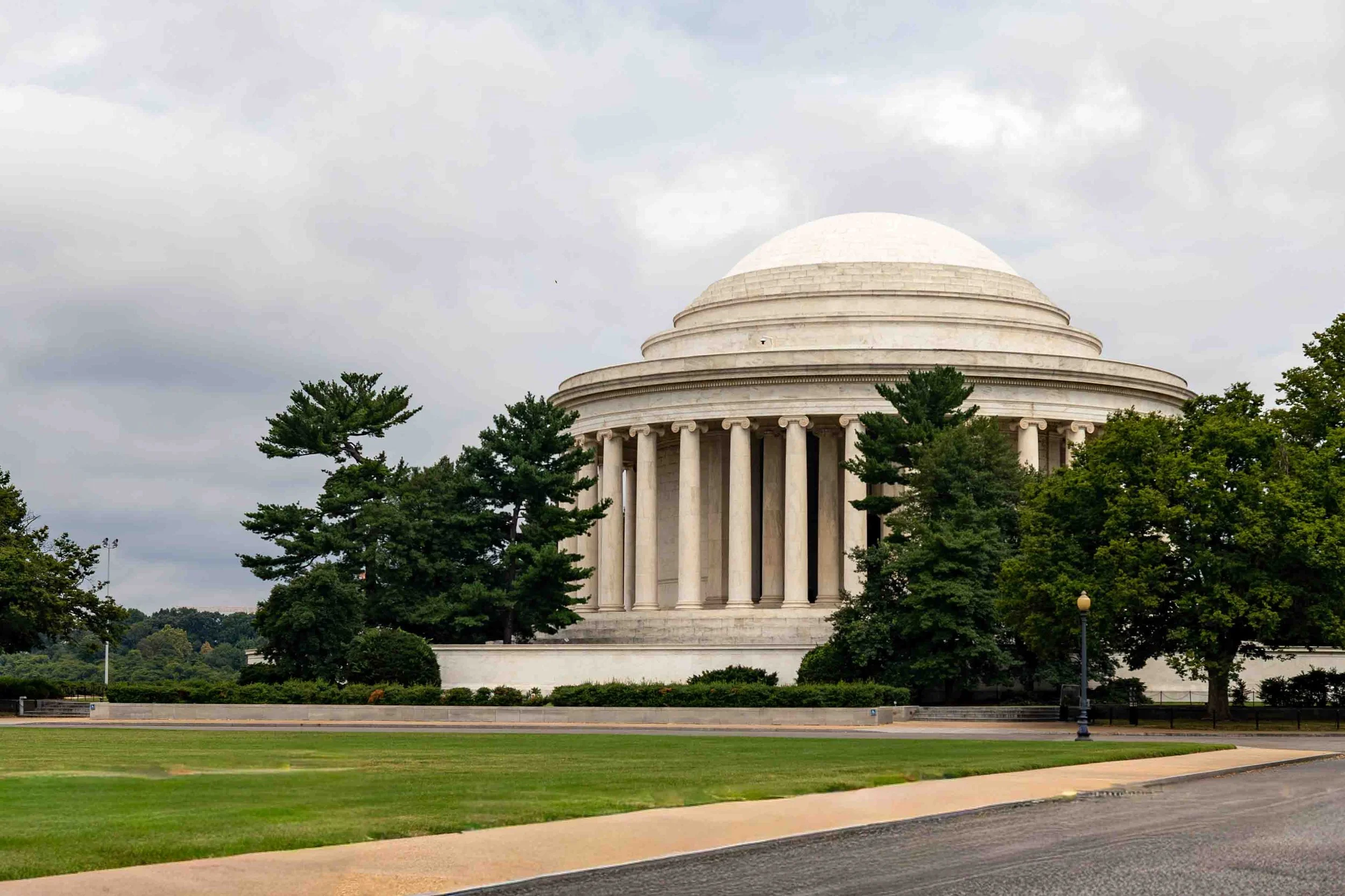
Thomas Jefferson Memorial
As someone who photographs architecture professionally, places like this naturally make me start looking for symmetry, lines, scale and angles beyond the standard straight-on tourist shot. Sometimes that means backing up, walking around the side or simply looking upward.
The cloudy weather helped here too, giving the white stone a softer appearance without the harsh contrast of direct afternoon sun.
Martin Luther King Jr. Memorial
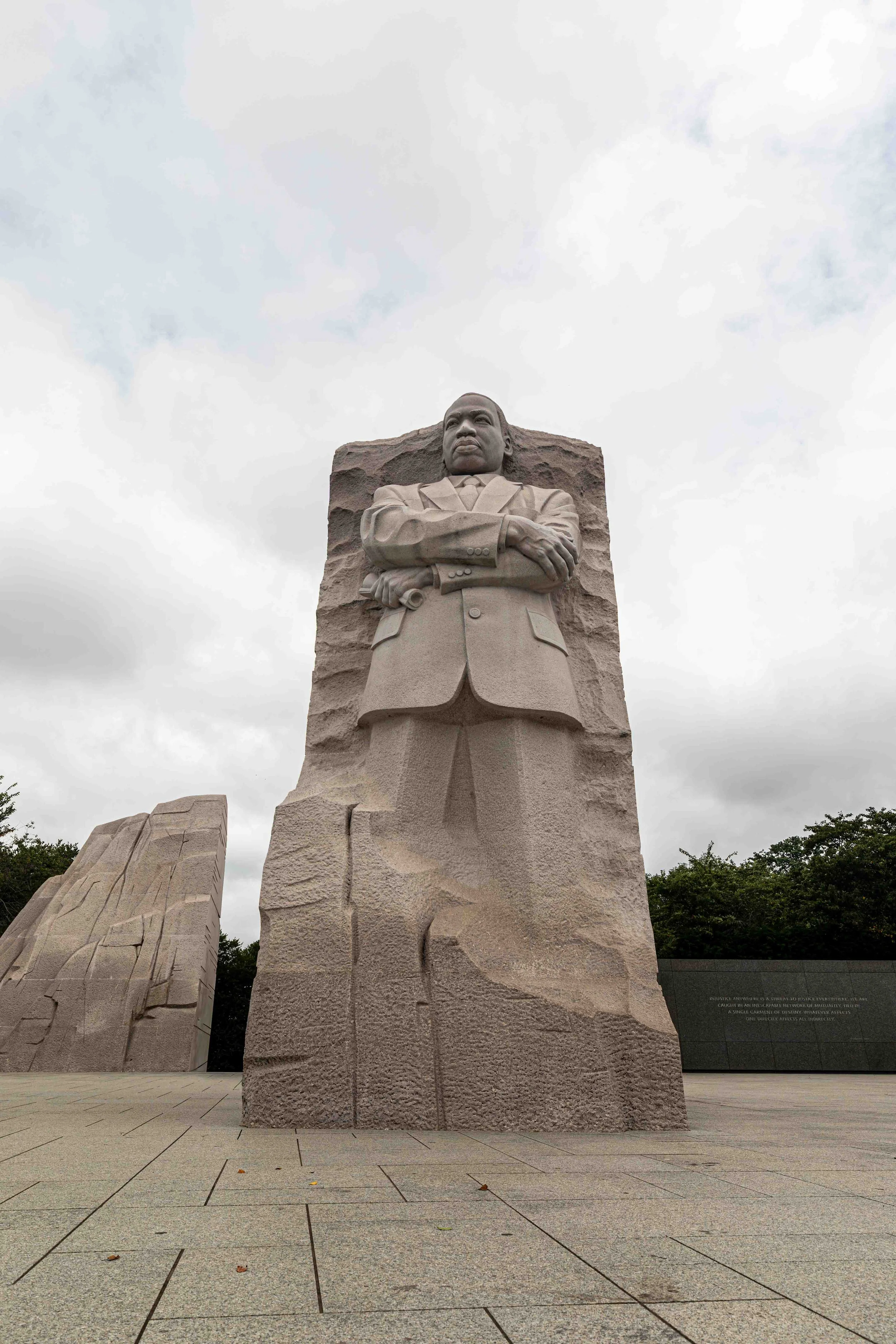
Martin Luther King Jr. Memorial
The Martin Luther King Jr. Memorial had a completely different atmosphere.
The centerpiece is the enormous Stone of Hope, with Dr. King carved into the granite overlooking the Tidal Basin.
Rather than columns and domes, you're surrounded by stone, quotations and open space. It is one of those places where I didn't feel the need to rush through just to get to the next stop.
Later in the day, that history connected directly with another place I visited: the Lincoln Memorial, where Dr. King delivered his I Have a Dream speech during the March on Washington in 1963.
That became something I really appreciated about Washington. The memorials aren't isolated pieces of history. Many of their stories overlap within the same few miles.
Remembering Those Who Served
Several of the day's most meaningful stops were the memorials dedicated to Americans who served in war.
At the Korean War Veterans Memorial, the stainless-steel soldiers moving through the landscape create an almost lifelike scene when you're standing among them rather than viewing them from a distance.
During my visit, there was also a memorial wreath placed near the soldiers.
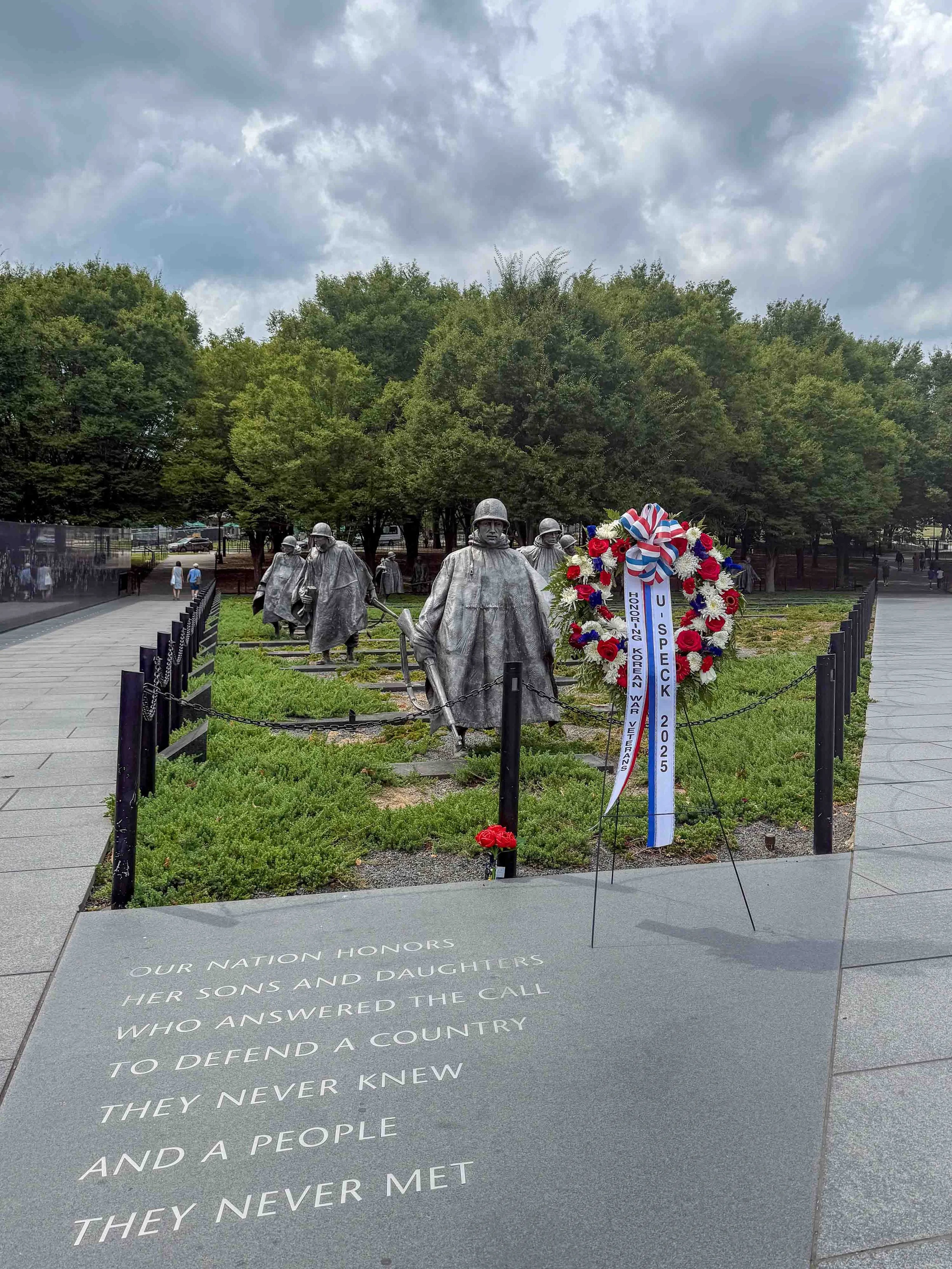
Vietnam Veterans Memorial
One of the memorial's best-known messages says it simply:
Freedom Is Not Free.
Nearby, the Vietnam Veterans Memorial offers a very different experience.
Instead of towering above you, the long black granite wall gradually descends into the landscape. Thousands of names cover its polished surface while visitors and the surrounding city reflect across it.
I also photographed the nearby Three Servicemen statue, depicting three soldiers looking toward the wall.
These were places where I naturally slowed down. Sometimes putting the camera down for a few minutes is just as important as taking the photograph.
The Lincoln Memorial
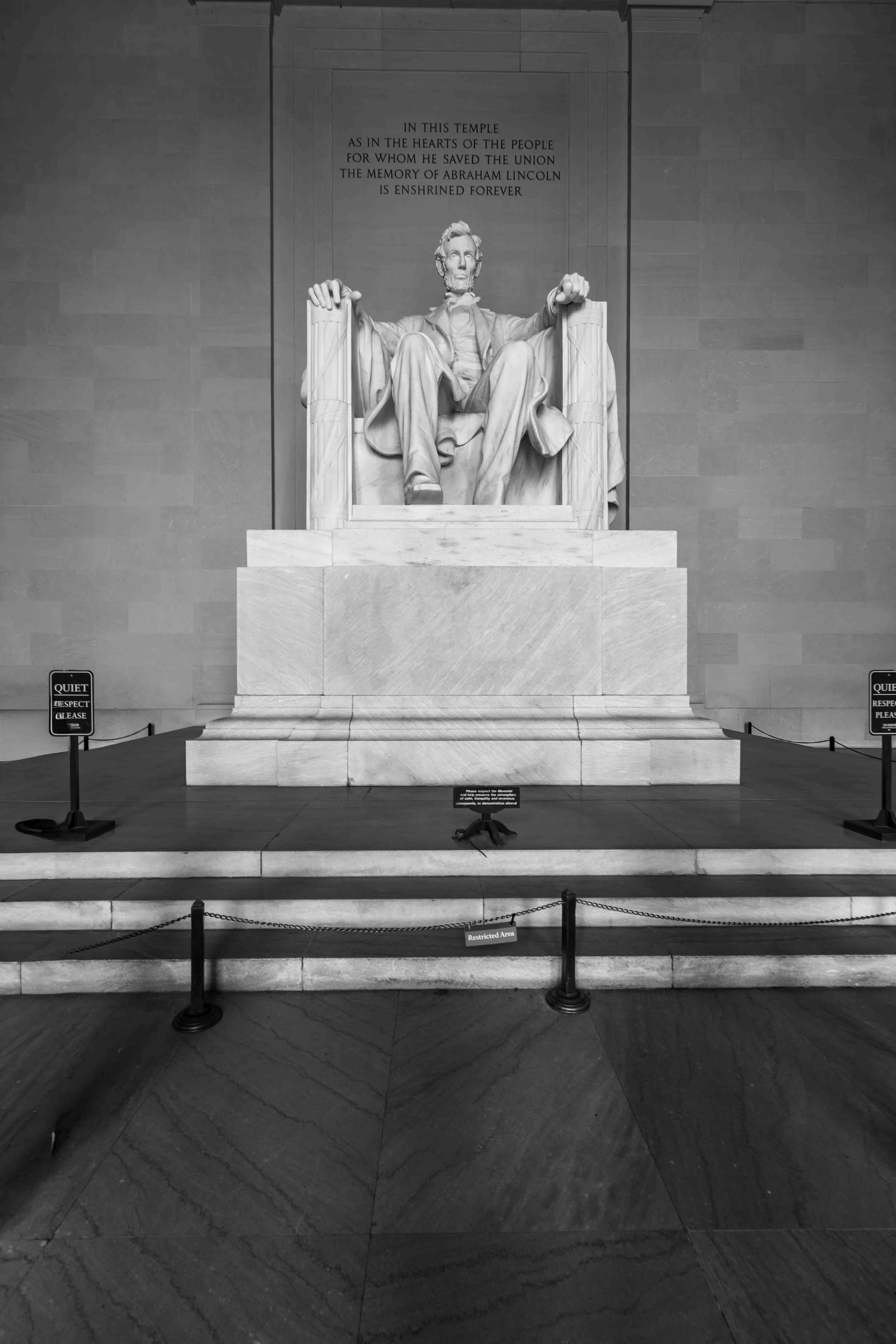
Eventually, we reached one of Washington's most recognizable landmarks: the Lincoln Memorial.
There are certain places you've seen so many times in photographs, movies and television that you think you already know what they'll feel like.
Then you stand inside them.
The statue of Abraham Lincoln is much larger in person than photographs make it seem, sitting beneath the inscription:
“In this temple, as in the hearts of the people for whom he saved the Union, the memory of Abraham Lincoln is enshrined forever.”
I photographed Lincoln in black and white, which became another one of my favorite images from the day.
Outside, the view changes completely.
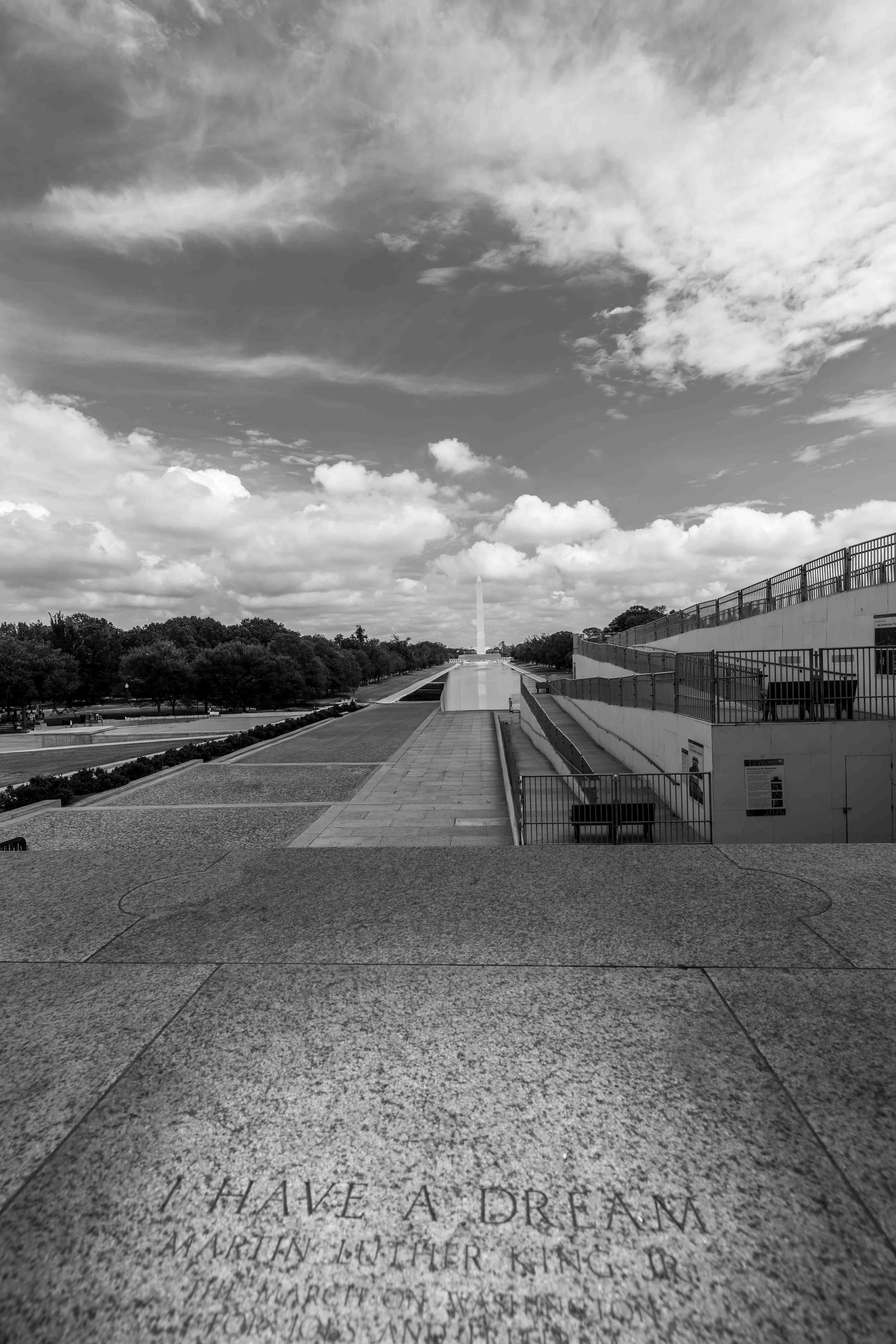
Standing on the steps and looking across the Reflecting Pool toward the Washington Monument is one of those classic D.C. views that almost everyone recognizes.
Also embedded into the steps is the marker showing where Dr. Martin Luther King Jr. stood when he delivered his I Have a Dream speech on August 28, 1963.
It is relatively easy to miss if you don't know to look for it, but standing there helped connect the Lincoln Memorial back to the MLK Memorial I had visited earlier.
Lunch at Riverside Grill
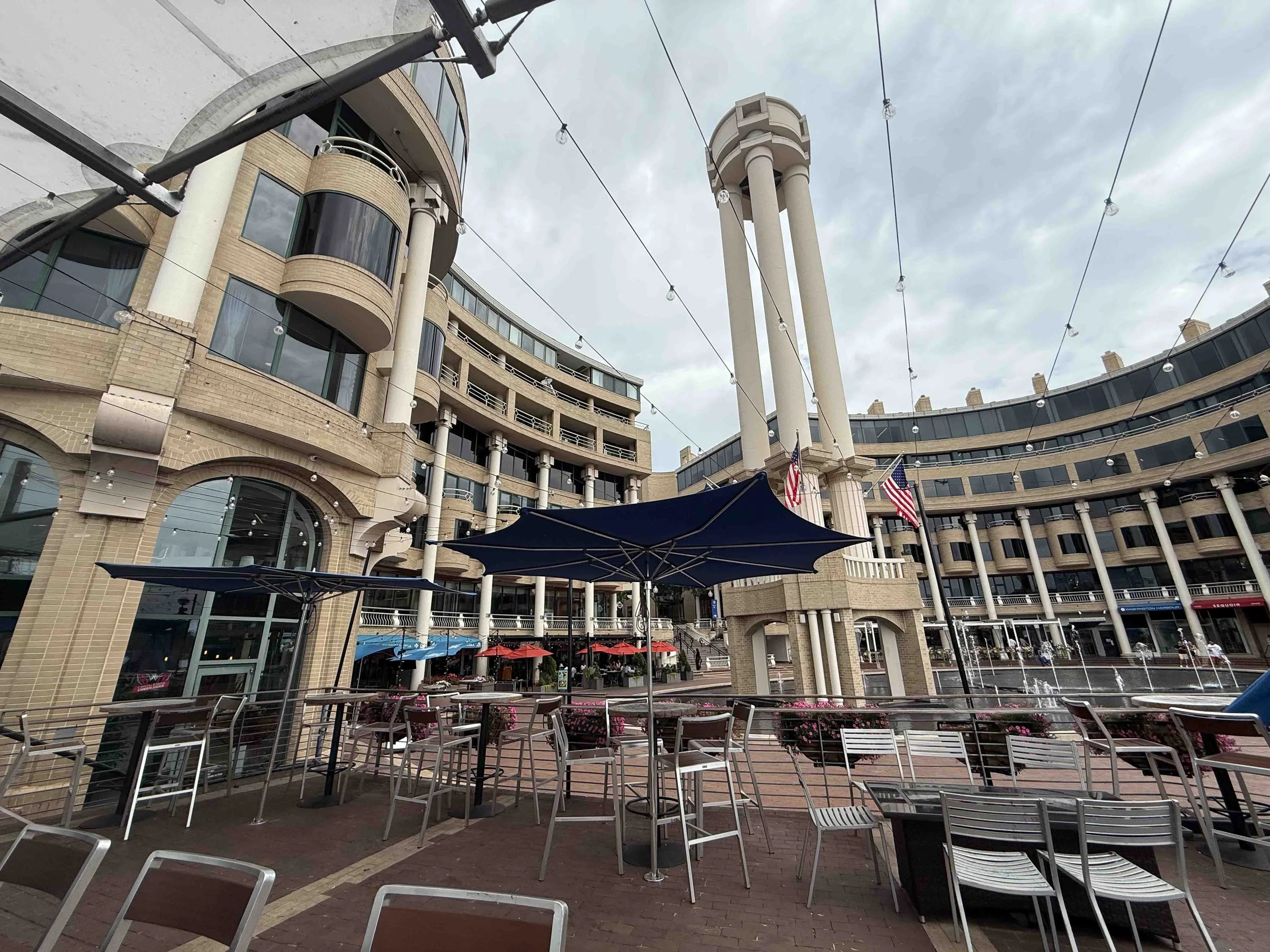
After spending the morning moving between memorials, I was definitely ready for food.
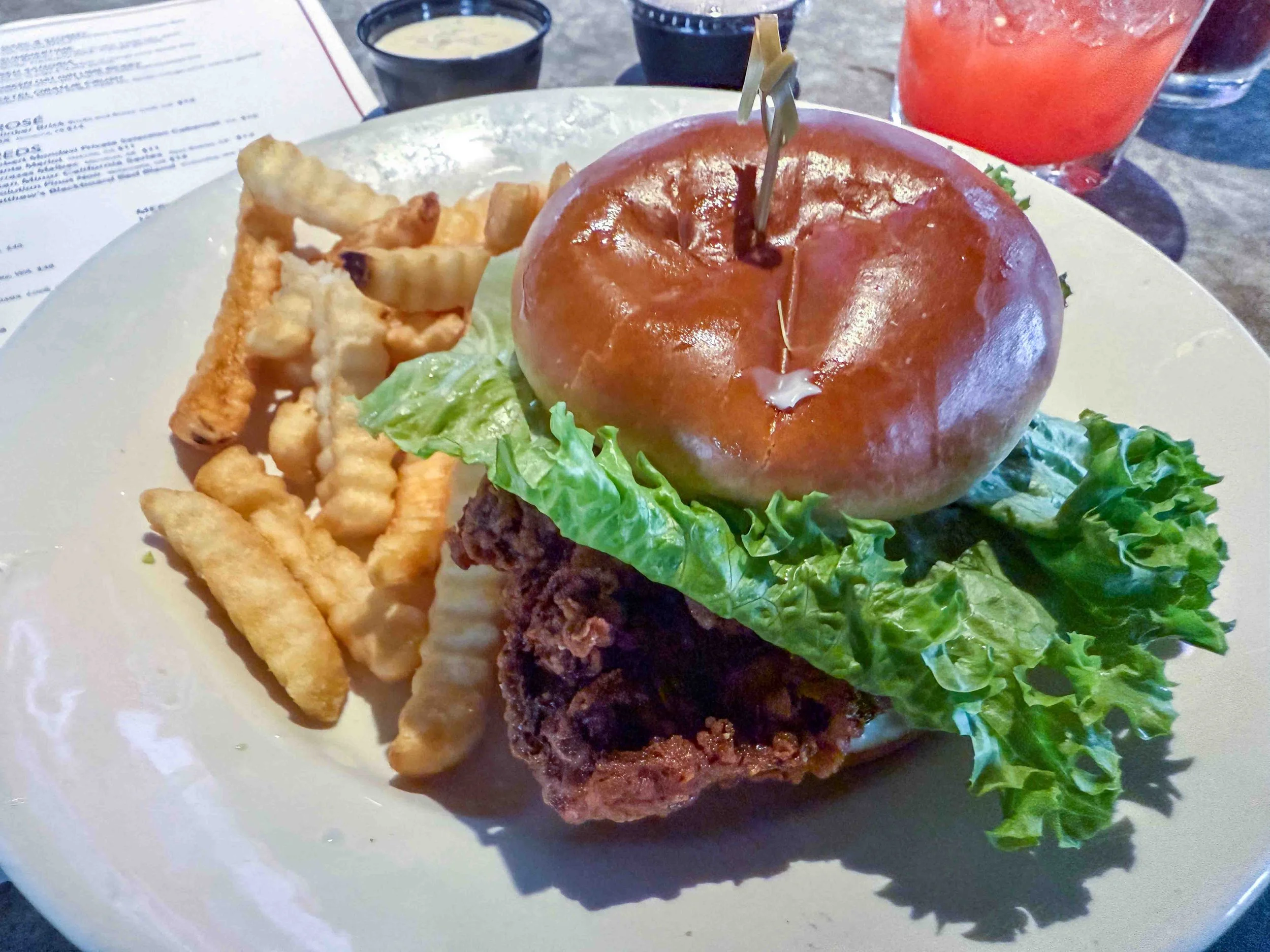
I stopped at Riverside Grill along the Georgetown waterfront, ordered a burger with fries and a drink, and took some time to sit down before continuing the day.
The waterfront itself felt completely different from the monumental side of Washington I had been exploring all morning. Between the restaurants, boats and activity around the water, it gave the afternoon a nice change of pace.
And after walking around with camera gear for several hours, sitting down for a while felt pretty good too.
Travel Tip: Give Your Food Budget More Breathing Room
One thing I learned pretty quickly in Washington, D.C. is that the food can be AMAZING, but the cost can add up just as quickly. Some of my sit-down meals were reaching around $60–$100 once I included food, a drink, tax and tip, and doing that several times over a trip can take a much bigger bite out of your budget than you expect.
This is something I would keep in mind for almost any vacation, not just D.C. As a general starting point, consider setting aside around 20–30% of your overall trip budget for food and drinks, or roughly $75–$125 per adult, per day for a typical U.S. trip depending on where you're going and how you like to eat. If your budget allows it, I would rather save double — or even triple — my original food estimate and come home with money left over than realize halfway through the trip that I underestimated it. The extra money is a cushion, not a spending goal, and mixing in quick-service meals, sandwiches or takeout can help stretch that budget even further.
Seeing Washington From the Potomac
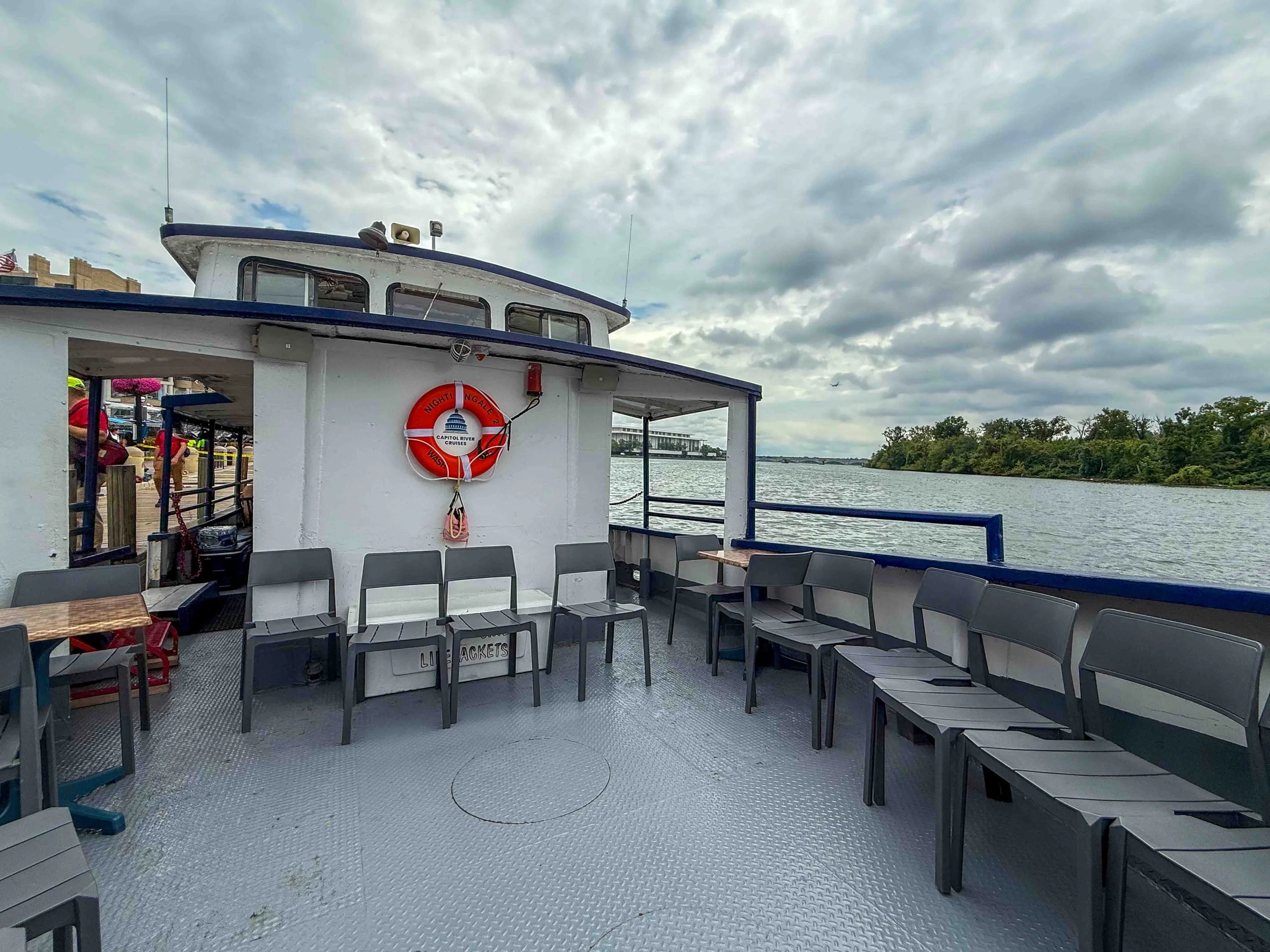
Capitol River Cruises
Next, it was time to get onto the Potomac River with Capitol River Cruises.
This turned out to be one of my favorite changes of pace during Day 3.
After spending so much time walking around monuments and memorials, seeing Washington from the water gave me a completely different perspective while also giving my feet a much-needed break.
Naturally, I still had my camera with me.
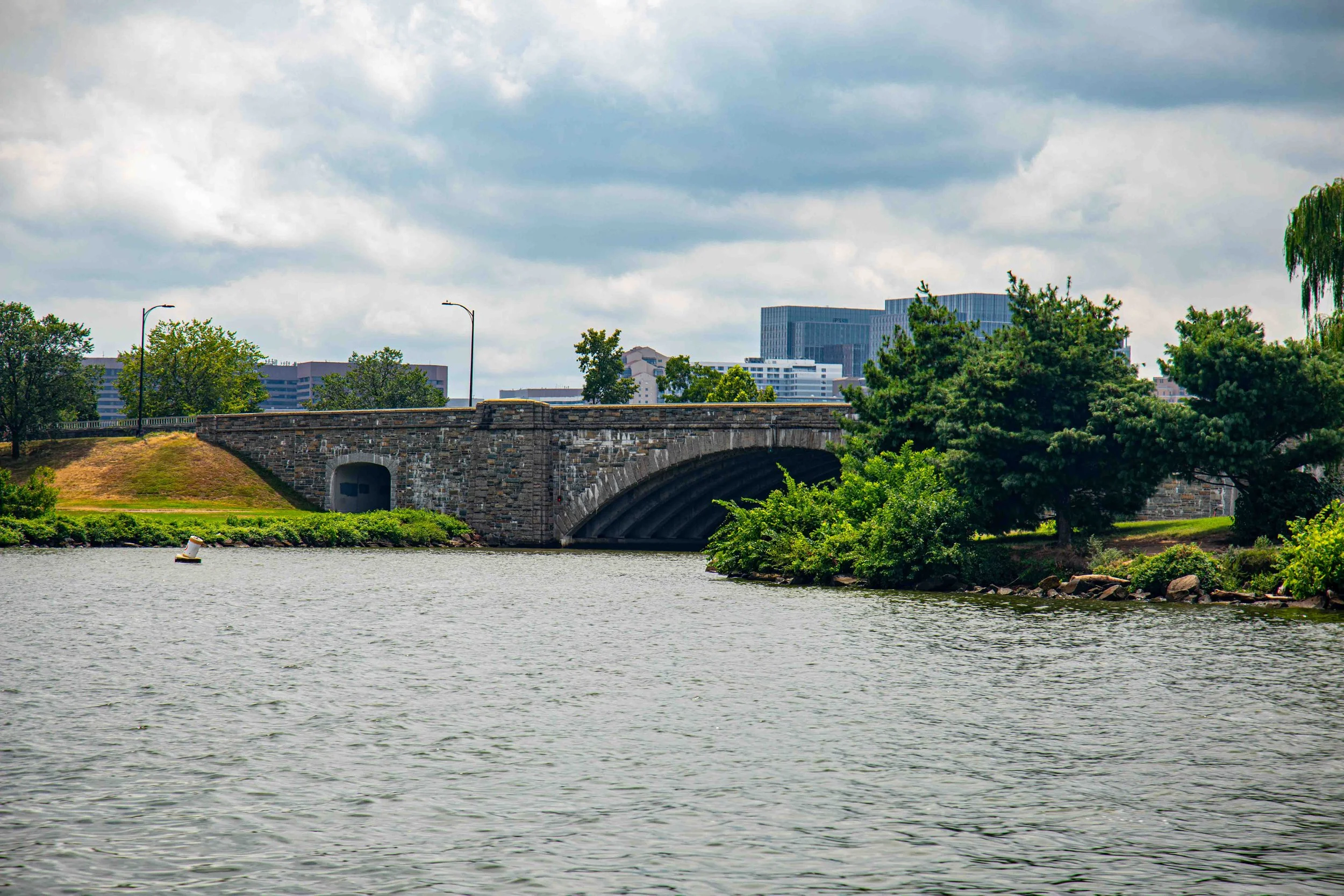
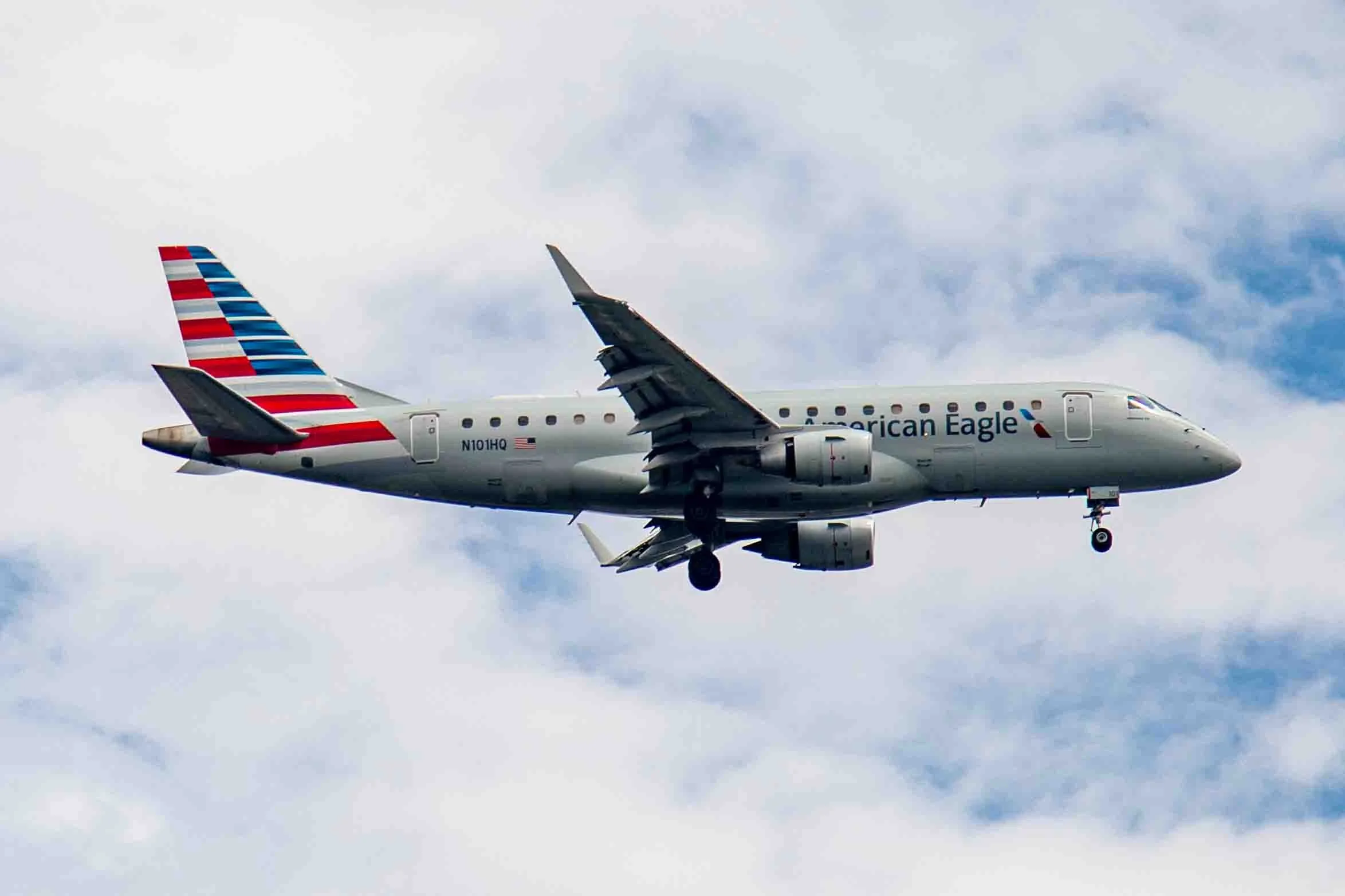
I photographed the shoreline, bridges, views back toward the city and several aircraft flying overhead.
As someone who already enjoys aviation, seeing an airplane approaching while I happened to have a camera ready was basically an invitation to start shooting.
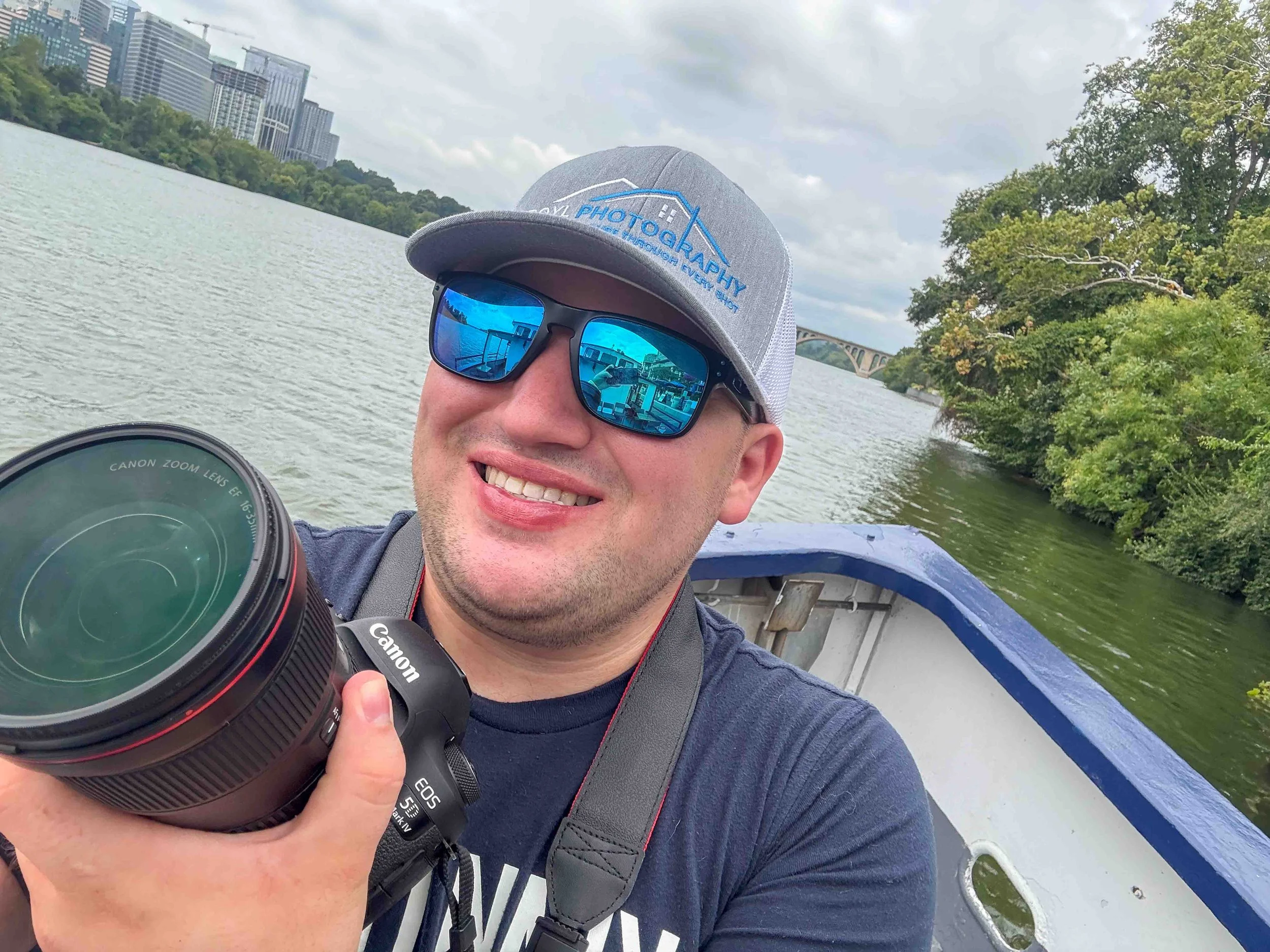
I also took a few photos of myself sitting on the boat with the camera.
Those became some of my favorite personal images from the trip because they show what traveling often actually looks like for me: camera in hand, looking around and waiting to see what catches my attention next.
One More Major Stop: The National Archives
After the tour and cruise, I still had one major place left on my list: the National Archives.
This was one stop I especially wanted to make because inside the Rotunda are the Charters of Freedom — the Declaration of Independence, the Constitution of the United States and the Bill of Rights.
Seeing the actual documents is difficult to describe.
Most of us have learned about them since we were kids. We've seen reproductions in textbooks, heard them discussed in classrooms and watched them referenced countless times in documentaries, movies and the news.
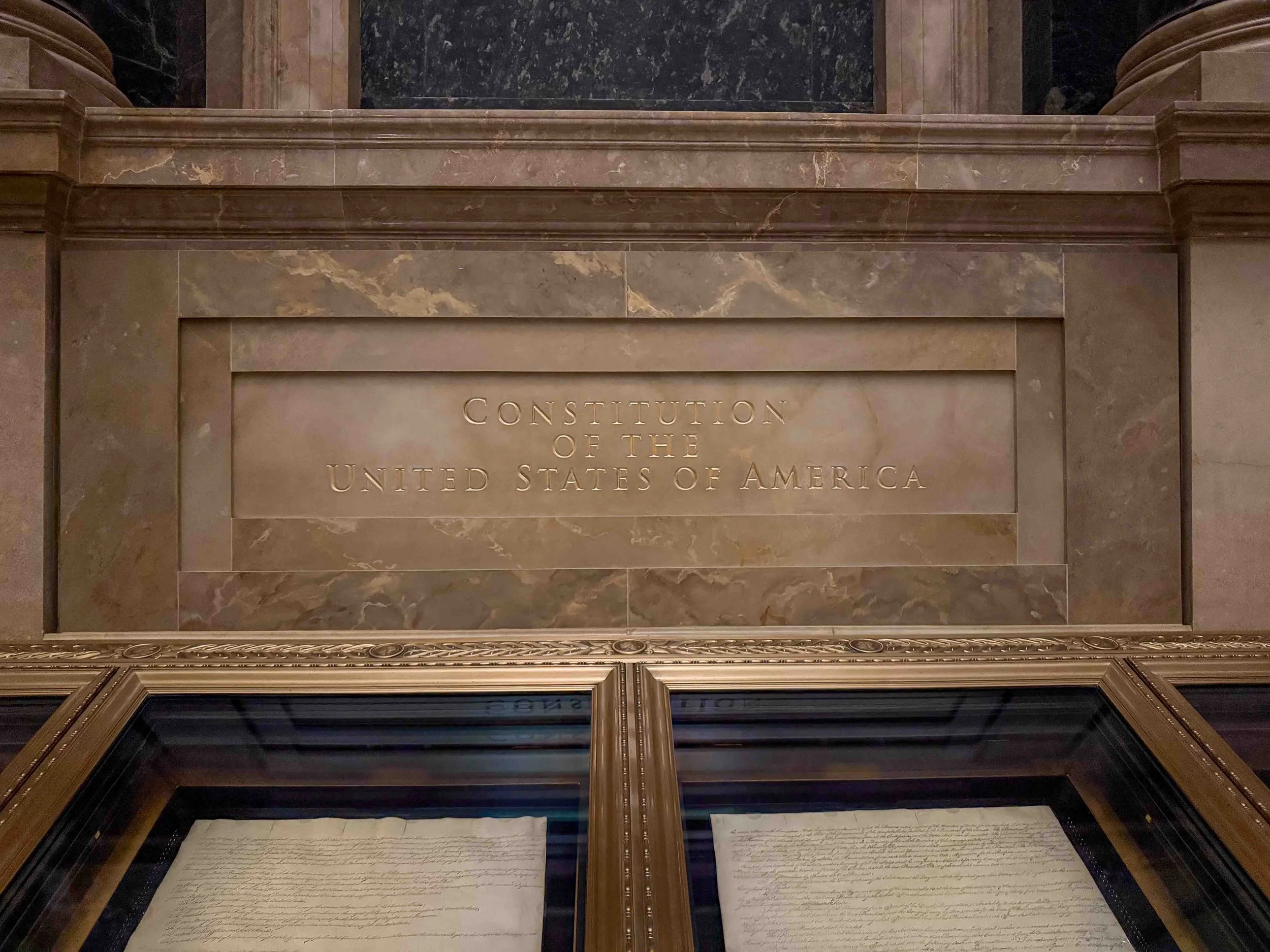
Then suddenly, you're standing only a few feet away from the originals.
They're old.
They're faded.
They're carefully protected.
And they're real.
The United States Constitution especially stuck with me.
After spending most of the day visiting monuments and memorials connected to American history, ending the sightseeing portion of Day 3 standing in front of the documents that helped establish the country felt like the right way to finish.
Washington is one of the few places where history isn't always something described on a plaque.
Sometimes the actual piece of history is sitting directly in front of you.
Ending the Day With Potbelly
By the time I left the National Archives, I was ready to call it a day.
Instead of going out for another sit-down dinner, I found a nearby Potbelly, grabbed something simple and brought it back to the hotel.
After such a full day, that was exactly what I needed.

Looking Back at Day 3
Day 3 covered an incredible amount of Washington.
I visited memorials honoring presidents, civil rights leaders and Americans who served their country. I photographed some of the city's most recognizable architecture, saw Washington from the Potomac and finished the sightseeing portion of the day standing in front of the Constitution of the United States.
But some of the smaller moments are just as memorable.
Sitting on the boat with my camera.
Stopping for lunch along the waterfront.
Photographing airplanes because I happened to notice them overhead.
And deciding that Potbelly back at the hotel sounded better than another restaurant.
Those moments are part of traveling too.
After three days in Washington, one thing was becoming very clear: you could spend a week here and still have another museum, memorial, neighborhood or piece of history left to see.
Day 3 had been full, and there was still more of Washington ahead.